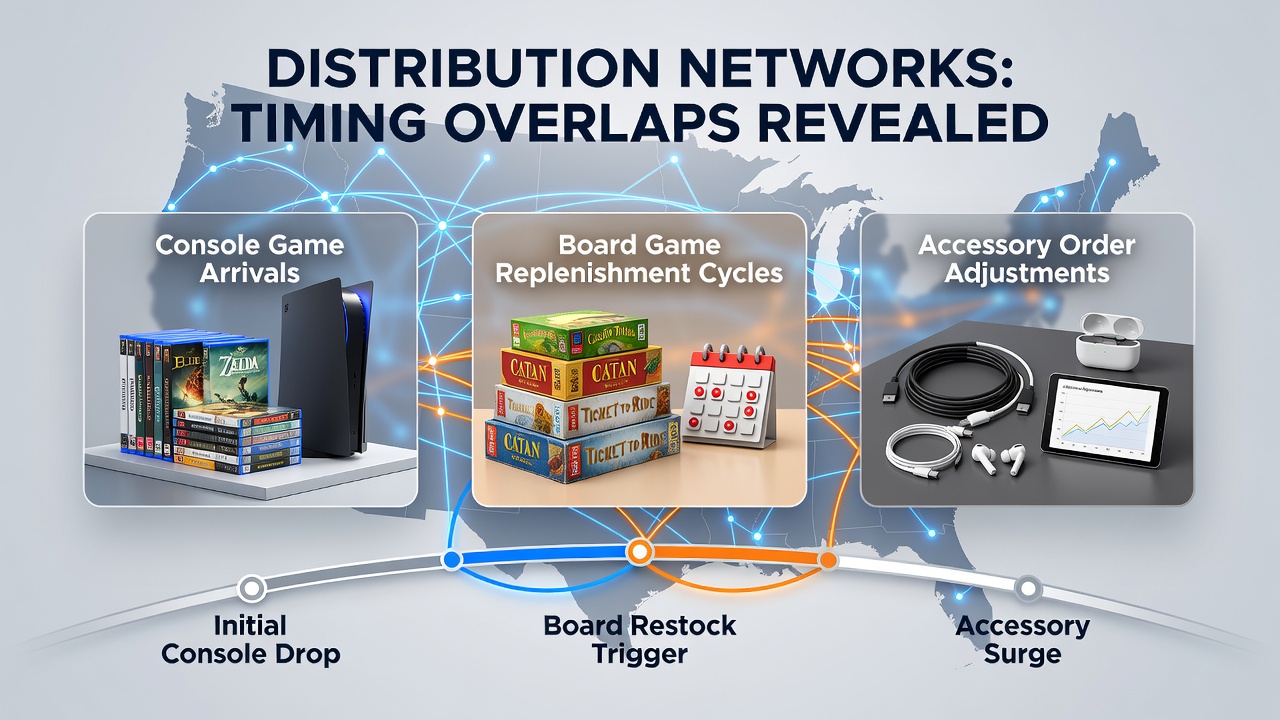
US Freight Systems Demonstrate Linked Schedules for Entertainment Product Categories
Distribution networks across the United States connect console game arrivals with board game replenishment cycles and accessory order adjustments in ways that reveal clear timing overlaps, and freight operators track these movements through centralized logistics platforms that aggregate shipment data from multiple sectors. Records from major ports and rail hubs indicate that console title deliveries often coincide with restocking of strategy games and controller shipments, while warehouse management systems adjust inventory levels based on predictive algorithms that factor in seasonal demand spikes. In September 2026, transportation logs showed elevated volumes of mixed cargo containers carrying both digital entertainment hardware and tabletop expansions, creating synchronized delivery windows that retailers use to align store displays and online listings.
Logistics Coordination Patterns
Freight coordination relies on shared data feeds from carriers and distributors, and these systems merge arrival estimates for console units with projections for board game reprints plus accessory bundles. Observers note that peak periods in one category trigger ripple effects in others, because container space optimization pushes companies to group compatible products during transit. Studies from the Bureau of Transportation Statistics reveal that intermodal shipments between West Coast ports and Midwest distribution centers frequently bundle video game consoles alongside dice sets and peripheral adapters, reducing empty return trips and stabilizing costs across the network.
Retail chains monitor these patterns through enterprise resource planning software, and adjustments occur when console launch dates shift by even a few weeks, prompting earlier or later board game deliveries to match storage capacity. Data integration platforms pull from point-of-sale terminals and carrier tracking APIs, allowing managers to forecast accessory demand surges that follow major entertainment releases. One logistics provider documented cases where a single console wave arrival led to simultaneous replenishment of card sleeves and miniature painting kits within the same 72-hour window at regional hubs.
Seasonal Overlaps and Inventory Adjustments
Seasonal overlaps become pronounced during holiday buildups, and analysts track how console pre-order fulfillment timelines intersect with board game expansion releases plus accessory discount cycles. Evidence from warehouse throughput metrics shows increased handling of combined loads during late summer months, when back-to-school promotions overlap with upcoming fall entertainment launches. Retailers in multiple states report that accessory order volumes rise in tandem with board game restocks once console shipments clear customs, because shared trucking routes carry mixed pallets to the same facilities.
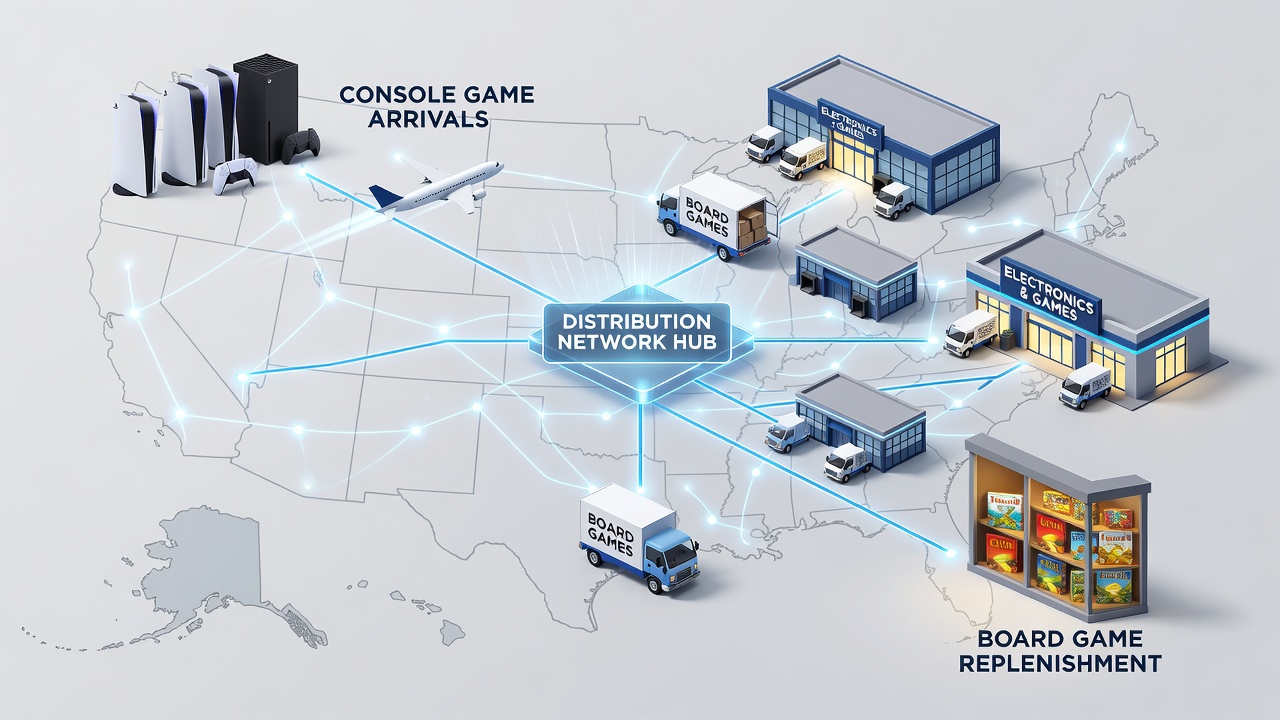
Inventory strategies adapt by reserving dedicated zones for high-turnover items, and these zones accommodate both plastic game cases and cardboard boxes during synchronized delivery periods. Figures from industry reports indicate that timing overlaps reduce dwell times at sorting centers, because staff process console accessories and themed board game add-ons in single shifts rather than separate operations. Canadian retail associations have published comparable findings on cross-border freight movements, showing similar linkage patterns that extend into northern distribution nodes.
Data Integration Across Regions
Data integration systems pull shipment records from various geographic zones, and these records highlight how East Coast fulfillment centers align console restocks with tabletop product surges that originate from European printing facilities. Observers point to automated alerts that notify buyers when accessory inventory dips coincide with upcoming board game waves, prompting consolidated purchase orders. Research from university logistics programs demonstrates that predictive modeling improves accuracy when it incorporates variables from multiple entertainment categories rather than treating them in isolation.
Trucking schedules reflect these connections, and drivers often deliver mixed loads that include console bundles, expansion packs, and controller variants to the same retail backrooms. Records from September 2026 illustrated repeated instances of such combined deliveries across the Midwest corridor, where timing overlaps allowed stores to refresh entire gaming sections in coordinated restocking events. Industry groups note that this approach minimizes partial truckloads and supports more consistent availability for consumers seeking related products.
Conclusion
Overall patterns in United States distribution networks continue to link console game arrivals with board game replenishment cycles and accessory order adjustments through shared timing mechanisms, and ongoing data collection supports further refinement of these coordinated movements. Additional monitoring from transportation agencies and retail networks will likely expand understanding of these intersections in coming periods.